
DALL·E 3: Unleashing Creativity in the Digital Canvas
- megannwarren
- May 20, 2024
- 5 min read
As the sun filters through the living room window, casting a warm glow on our cat, I sit down with my iced caramel coffee, contemplating the fascinating world of AI art. As a homemaker, my days are filled with chores, laughter, and the comforting rhythm of family life. But today, I want to delve into the intersection of technology and creativity—the realm where DALL·E 3, the AI artist, weaves its magic.
DALL·E 3: A Brushstroke of Imagination
DALL·E 3, the latest iteration of OpenAI’s text-to-image system, has captured the imagination of artists, designers, and dreamers alike. Unlike its predecessors, DALL·E 3 understands nuance and detail, translating our ideas into exceptionally accurate images. Imagine describing a chocolate chip cookie being dipped in milk, and DALL·E 3 conjuring an expressive oil painting that captures the explosion of flavors. It’s like having a creative partner who paints with pixels and algorithms.
The Legal Canvas: Who Owns AI Art?
But let’s step back and ponder the legal brushstrokes. Who owns AI-generated art? The answer lies in the interplay of pixels and copyright law. Unlike traditional art, where human creators hold the brush, AI art dances to the rhythm of algorithms. Legally, AI-generated art lacks an identifiable human author, rendering it uncopyrightable. So, while we marvel at DALL·E 3’s creations, the canvas remains open—free for all to explore, remix, and reimagine.
The Blurry Portrait: Edmond de Belamy
Remember “Edmond de Belamy,” the blurry portrait that fetched $432,000 at auction? Created by AI, it blurred the lines between human and machine. As artists, we stand at this crossroads, witnessing the birth of a new era. The canvas expands, and our role shifts from sole creators to curators of AI’s imagination.

The Palette of Possibilities: AI Art Applications
As a homemaker, I envision AI art enriching our lives in unexpected ways:
Advertising and Marketing: Brands use AI-generated visuals to captivate audiences. From surreal landscapes to futuristic product shots, AI wields its digital brush to evoke emotions.
Architecture and Design: Imagine AI designing avant-garde buildings, pushing the boundaries of form and function. Our homes may soon bear the signature of neural networks.
Fashion and Textiles: AI patterns, fabrics, and color palettes—our wardrobes could become canvases for algorithmic elegance.
Film and Animation: DALL·E 3’s siblings create movie posters, storyboard frames, and animated sequences. The silver screen embraces silicon dreams.
Music and Poetry: Beyond images, AI composes haunting melodies and crafts poetic verses. It whispers secrets only neural networks understand.
Virtual Reality: Step into AI-rendered worlds, where pixels blend seamlessly with imagination. The canvas stretches beyond the horizon.
The Commercial Rights Conundrum
Copyright Protection for AI-Generated Art:
The U.S. Copyright Office takes the position that AI-generated art cannot receive copyright protection.
However, this doesn’t mean artists can’t sell their AI-generated works. They can still do so under commercial use licenses.
The catch? Anyone can potentially use these works without legal consequences, as they lack copyright protection.
General Principles of Copyright Law:
While there are no specific laws governing the sale of AI-generated art, some general principles still apply.
Artists should consider licensing agreements, contracts, and clear terms of use when selling their creations.
Buyers and collectors must navigate this legal grey area, understanding that AI art occupies a unique space in the art world.
Creating Captivating Coloring Books with AI and Canva
As a homemaker, I’ve discovered a delightful way to blend technology and creativity: by crafting coloring books that spark joy. Let me share my journey of using AI-generated art and Canva to assemble two charming coloring books—one filled with a cute fantasy adventure and the other a more realistic approach to fantasy.
The AI Brushstrokes: Generating Imagery
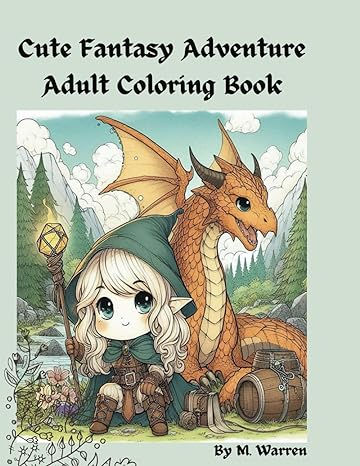
Coloring Book
Prompt: “Create 8 different prompts for a coloring book aimed at adults. The theme? Cute Fantasy!”
Armed with this prompt, I turned to AI art tools. Using Canva’s Magic Media tool, I generated adorable fantasy illustrations. From a troll hiding under a bridge to gnomes stealing a treasure.
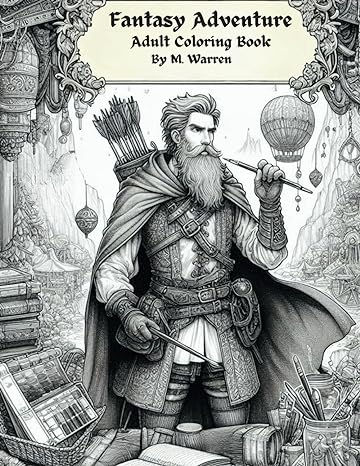
Prompt: “Imagine the cosmos! Create 10 prompts for a Fantasy-themed coloring book.”
The AI responded with Monks ready for a fight, Dragon knights, Faries casting their magic, and more.
The Canva Canvas: Assembling the Books
Once I had my AI-generated images, it was time to weave them into cohesive coloring books. Canva, with its user-friendly interface, became my creative haven:
Setting Up the Canvas:
I created custom designs in Canva, ensuring the dimensions were perfect for printing. This takes some time; you may have to play around with the shaping and sizes of images. Having a Canva Pro membership is necessary for this.
Bleed settings were essential—no one wants half-colored images!
Layout and Composition:
I arranged the illustrations and scenes, balancing simplicity and detail.
Canva’s drag-and-drop functionality made it a breeze to organize the pages.
Adding Text and Borders:
Each coloring book needed a title and a brief introduction. Canva’s text tools allowed me to play with fonts and colors.
Simple borders framed the images, making them feel like standalone artworks.
Exporting and Printing:
Canva lets you export your creations in various formats—PDF, JPEG, or PNG.
At first, I printed the coloring books at home, then went to Amazon's KDP for professional printing services.
The Final Brushstroke
As I sip my coffee, it strikes me that DALL·E 3 isn’t just an artist; it’s a catalyst. Pixels blend seamlessly with algorithms, blurring the lines between creativity and code. Our canvas awaits—an unfinished masterpiece, waiting for our strokes to bring it to life.
Creativity blooms unexpectedly, like wildflowers pushing through cracks in the pavement. We’re no longer confined by traditional tools or conventional norms. Instead, we wield neural networks and lines of code, shaping ideas into existence. Our kitchen tables transform into makeshift studios, where coffee rings mingle with sketches, and laptops hum with possibility.
Ownership takes on a new dimension. Who truly owns a dream conjured by AI brushstrokes? Perhaps it belongs to the collective wonder—the shared awe of countless minds. We become stewards of inspiration, tending to pixels that morph into galaxies, dragons, and whispered secrets. Our role isn’t possession; it’s nurturing creativity’s delicate flame.
Collaboration transcends boundaries. DALL·E 3 bridges homemakers and engineers, artists and algorithms. We trust unseen hands—the code—to amplify our vision. Together, we compose symphonies of color, narratives that ripple across screens, and futures waiting to be painted.
So, my fellow homemakers, let’s raise our mugs to this brave new canvas. The pixels pulse with potential, and the algorithms hum with promise. Our strokes—whether ink or code—leave traces on the fabric of time. The masterpiece? It’s unfolding, stroke by stroke, in the quiet corners of our hearts. 🎨✨☕
*Disclaimer: The views expressed in this blog post are purely imaginative and do not constitute legal advice.


Comments